OPERATIONS CORE
Fulfilling qualitative and quantitative research needs for the projects of I-HEAL. Sharing I-HEAL's research, knowledge, and products in widely accessible ways.
OPERATIONS CORE
The Operations Core provides the framework and stability of I-HEAL’s structure and meets regularly with all projects and cores. The Operations team is led by Dr. Nakase-Richardson and includes everyone with project management responsibilities as well as early career professionals to learn about the business side of conducting research. Efforts focus on supporting projects in the execution of their work.
Operation Core Responsibilities
Mentorship and Education
Creates and tracks both formal training opportunities and semi-formal collaborative learning.
Communication and Reporting:
Establishes communication processes and manages reports.

Regulatory and Budgeting:
Manages I-HEAL’s budget and ensures compliance.

Hiring and Onboarding:
Identifies and fills study personnel needs.
Meeting and Events:
Plans and hosts all study meetings and events.
Study Recruitment:
Engages and tracks project participants.
OPERATIONS CORE TEAM
The Operation Core team members are integrated throughout I-HEAL. Each project and core have at least one project manager to provide support, track progress, and facilitate execution of I-HEAL.

Risa Nakase-Richardson, PhD
Contact Multi-Principal Investigator Operations Director

Leah Phillips, MPH
Research Service Liaison Operations Co-Director

Brianna Tindall, MA
Project Manager

Amanda Tweed, BA
Project Manager

Deveney Ching, PhD
Project Manager
KEY INITIATIVES OF THE OPERATIONS CORE
The Operations Core improves process flow by establishing best practices for recruitment, using templates in meetings to track milestone progress, and providing consistent and clear updates in standing Project and Core bi-weekly meetings to ensure synergy across efforts.
Mentorship and Education
I-HEAL's infrastructure was established with the opportunity for mentorship occurring across individual projects and cores. As such, every meeting of a project or core serves as an opportunity for project-based learning and mentorship. For each project, senior investigators (Full Professors) are paired with mid-career (Associate Professors) or early career (Assistant Professors) professionals to acquire skills in funded project execution from regulatory to dissemination. The Operations Core facilitates and tracks educational series presentations, formal and semi-formal education and mentorship. Semi-formal and formal mentoring and education opportunities across I-HEAL in year 2 of the grant included 77 trainings and a reach of 534. The Operations Core facilitates trainings and tracks formal and semi-formal mentorship and education throughout the lifecycle of the grant. Examples include:
- Funding Your Study
- Qualitative Methods and Methodologies
- Identifying a Traumatic Brain Injury and Its Severity: Using The Ohio State University TBI Identification Method
- Human Centered Design Engagement
Informal co-learning and collaborative education and mentoring is also ongoing, allowing the team to support knowledge and skills of their colleagues.
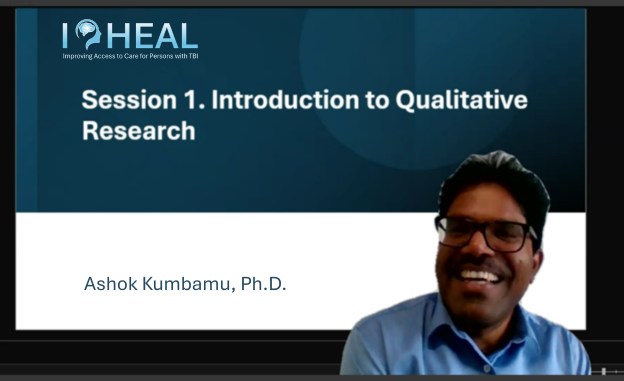
10-session qualitative research education series led by Dr. Ashok Kumbamu, I-HEAL’s Qualitative Division Lead.
I-HEAL team members take a mentorship survey annually to help guide mentorship efforts.
Study Recruitment
Stakeholder engagement and qualitative methods are crucial to I-HEAL’s research. We include the voices of those who experience the challenges that I-HEAL aims to address so that innovations can be implemented and impactful. The Operations team is crucial to integrating individuals with lived experience into our study. The team:
- Develops recruitment tools to contact participants
- Tracks places of outreach to include a wide variety of participants
- Screens and consents participants
- Tracks participation in research methods
- Facilitates transcriptions of focus groups and interviews
- Distributes incentives
Survey for providers of all backgrounds to share their experience on serving those with cognitive difficulties.
Flyer to recruit licensed providers of all backgrounds to participate in a short 10-15 survey.
Recruitment of people with TBI and caregivers to share experiences in medical appointments.
Flyer to recruit providers who work with patients who have cognitive difficulties in a focus group.
Recruitment of people with TBI and caregivers to share experiences with inpatient rehabilitation.
Tracking system coming soon.
Meeting and Events
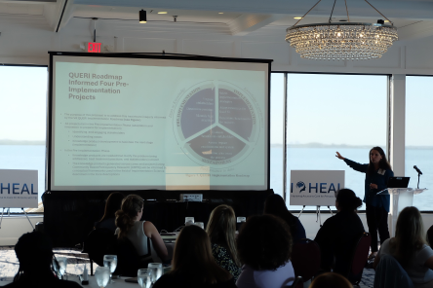
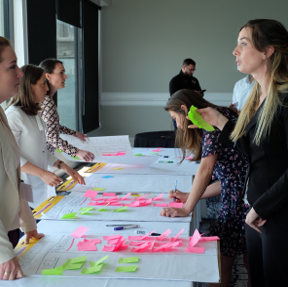
Operations team members provide ongoing meeting support for all programs and cores. They identify meeting times, develop agendas, and provide notetaking and action item follow-up. The team also facilitates large group meetings, including our Kickoff Meeting that occurred in May 2024. We are currently in process of planning another engagement meeting that will occur in September 2026.
Meeting outline for the I-HEAL grant’s kickoff engagement meeting in May 2024.
Templates and resources for project and core meeting management.
Communication and Reporting
Stakeholder communications in I-HEAL include both formal reporting and consumer-based information sharing. The Operation Core collaborates across projects and cores to provide timely updates to our funding source (The Congressionally Directed Medical Research Program within the Department of Defense). We also develop communications for internal stakeholders (our lived experience partners and core research team) and broader audiences through platforms like our website and social media.
I-HEAL’s inaugural newsletter, which highlights achievements from year two of the grant.
A graphic of I-HEAL’s internal communication strategy, showing coordination across functions and staff.
Hiring and Onboarding
The four projects and four cores are comprised of I-HEAL team members whose knowledge and skills go beyond neuropsychology and traumatic brain injury. Our team’s diverse skillsets include implementation science, health economics, product design, qualitative and quantitative methods, project management, and more. The Operations Core supports I-HEAL’s research by staffing the project; team members provide job listings, recruit, conduct interviews, hire, and onboard new colleagues.
Coming Soon: Interview Tools
Regulatory and Budgeting
Ensuring the safety of Veterans, Service members, and other participants is a key responsibility of the Operations Core. The team works closely with three different Institutional Review Boards (IRBs) to ensure minimal risk to participants who engage in our study and data is secure. We also collaborate with other VA departments to develop data use agreements, discuss technology transfer, and more.
A large part of regulatory compliance is also making sure that we closely track and remain transparent with our funders about spending. The Operations Core is dedicated to providing high levels of accountability and promoting trust with stakeholders as we execute ongoing study efforts and support emerging needs in response to I-HEAL’s research and innovations.
Coming Soon: Budget Items to Consider
Core Interplay
The Operations Core collaborates with and supports other I-HEAL cores’ for both daily and large initiatives.
The Operations Core facilitates information sharing with Data and Communication Core for I-HEAL’s impact tracker. Also, identifies and supports purchase of tools for I-HEAL’s knowledge translation and dissemination.
The Operation Core organizes and tracks the Implementation Science Core’s training of early career implementation scientists and translation efforts.
Operations Core works with Community Engagement Council to track stakeholder engagement and support engagement efforts like conference workshops.